|
Scotland has been urged
to take strong notice of a cautionary tale from across the Irish Sea
where an influx of data centres, it is claimed, represent a "hidden tax"
as its neighbouring country's energy demands absorb over one fifth of
Ireland's electricity last year, costing households millions in extra
bills.
Scotland is endowed with a centuries-old enthusiasm towards practically
anything hinting at innovation. And it is difficult to ignore quite
compelling overtures from overseas clients especially from the likes of
the States with which the country has had a long and fruitful commercial
relationships since the heady days of Silicon Glen.
Such Big Tech powerhouses are facilitating global financial and other
online transactions equiring whip-fast connections and solutions. Yet,
some communities in the US, for example, have complained of overwhelming
energy demands from outlying centers leading to peak-time blackouts.

Holyrood is Scotland's leading
political and current affairs forum
It is all being fuelled
by the next wave of generative artificial intelligence (GenAI) marketed
by the planet's Big Tech.To some it represents a blessing, to others a
curse, helping or harming business and the wider society. Or both.
Measured Approach
To date, Scotland does appear to have adopted a measured approach
towards the data centre question. Now Holyrood Magazine reports national
planning advice could be introduced to stop hyperscale data centres
housing servers used in cloud computing and AI that use vast amounts of
energy.
Holyrood reports there are currently 24 proposed hyperscale centres
across Scotland, if all approved would consume up to one-and-a-half
times Scotland's peak electricity demand.
National energy and climate goals are also threatened with the Greens
welcoming the cautionionary stance but business leaders warning a pause
or halt risks undermining economic growth.
The Irish Times and the Guardian each report that date centres have
added hundreds of euros to household electricity bills "in a pattern
that could be replicated across Europe."
The Central Statistics Office says the use by such centres combined to
use 22 per cent of Ireland's electricity, more than all urban homes put
together. The equivalent figure in Scotland, along with the rest of the
UK, is six per cent.
A Friends of the Earth Ireland and Beyond Fossil Fuels dual-commissioned
report are startling. The centres have "drained" 715 million euros
(£620m) from the local economy increasing household bills by a
cumulative average of 360 euros between 2015 and 2023.

Fife's Auchtertool warns planned data
centre will be larger than entire village
Scottish Government
leaders have to weigh up what does, and doesn't, add to the country's
primary environmental framework enshrined in its Climate Change Plan
2026-2040.
Net-Zero Green Economy
The plan outlines over
150 actionable steps to meet statutory carbon budgets and transition the
country to net-zero greenhouse gas emissions by 2045, phasing out fossil
fuels and growing the green economy.
It remains to be seen if highly lucrative data centre deal overtures
from highly influential overseas tech enterprises cut into and right
across such an undoubtedly impressive Climate Plan that has just come
into force...
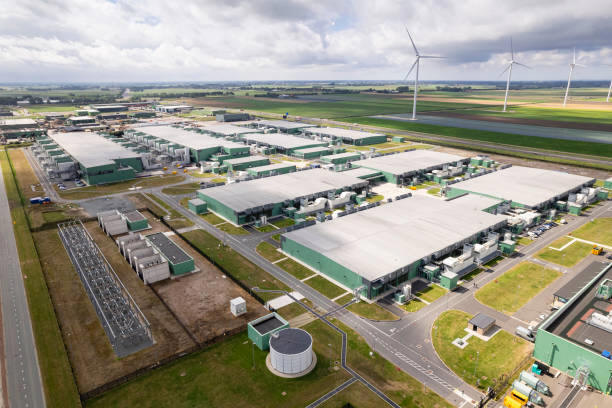
Can Scotland finely
balance lucrative data centre overseas overtures with its ambitious
renewables-based green agenda? |



