LEIGHTON, ALEXANDER, D.D.,
a divine and physician, celebrated for being the victim of a most
cruel persecution, was descended from an ancient family who
possessed the estate of Ulysses-haven, now Usan, near Montrose, in
Forfarshire, and was born in Edinburgh in 1568. He received his
education, and the degree of D.D., at the university of St. Andrews,
and afterwards studied medicine at Leyden, where he graduated. He
was subsequently minister of the Scottish church at Utrecht.
Resigning his charge, he came over to London, where he intended to
practice medicine, but was interdicted by the college of physicians.
Having published two works against episcopacy, the one entitled ‘The
Looking-Glass of the Holy War,’ and the other, ‘Zion’s Pica against
Prelacy,’ he was prosecuted in the Star Chamber, June 4, 1630, at
the instance of the bigot Land, and, being found guilty, was
sentenced by that iniquitous court to pay a fine of £10,000 to stand
in the pillory, to have his ears cut off, his nose slit, first on
the one nostril, and then on the other, his face branded, and to be
publicly whipped. Between the sentence and the execution, Dr.
Leighton escaped out of the Fleet prison, but was retaken in
Bedfordshire, and endured the whole of this shocking and atrocious
punishment. His sentence included also imprisonment for life; and he
was closely immured for eleven years in the Fleet, so that, when at
length released, he could neither walk, see, nor hear. This act of
barbarous atrocity, committed by the great upholders of episcopacy
in England, is without a parallel even in the annals of the Popish
Inquisition of Spain, black and blood-stained as the pages of that
dread tribunal are! The Long Parliament declared the entire
proceedings against him illegal, and voted him £6,000 as some
solatium for his sufferings; but it is doubtful if this sum was
ever paid. In 1642, Lambeth House being converted into a state
prison, he was appointed its keeper, and thus, by a strange
retribution, came to preside in the palace of his great enemy Land,
soon after the execution of that arch-bigot and persecutor. Dr.
Leighton died, insane, in 1644.
LEIGHTON, ROBERT, D.D.,
a prelate of singular learning, piety, and benevolence, the eldest
son of the preceding, was born in Edinburgh in 1611, and received
his education at the university there. He entered it as a student in
1627, and took his degree of M.A. in 1631. He was subsequently sent
to Douay in France, and, on his return, obtained, in 1641,
Presbyterian ordination, and was settled minister of the parish of
Newbattle in Mid Lothian. Neither his mind nor his disposition was
fitted for the stormy times in which he lived; and an anecdote is
related of him which strikingly exemplifies this. It was the custom
of the presbytery to inquire of its members whether they had
preached to the times, and when the question was put to Leighton, he
replied, with a kind of play upon the word, “For God’s sake, when
all my brethren preach to the times, suffer one poor priest to
preach about eternity.” His dislike to the covenant, and some early
predilections in favour of Episcopacy, which he had imbibed at
college, caused him to resign his living, and he was soon after
chosen principal of the university of Edinburgh, in which situation
he remained for ten years. Here he wrote his ‘Praelectiones
Theologicae,’ printed in 1693; and reprinted at Cambridge in 1828.
After the Restoration, when Charles II. resolved to force
Episcopacy on the people of Scotland. Mr. Leighton was persuaded by
his friends, and particularly by his brother, Sir Elisha Leighton,
who was secretary to the duke of York, to accept of a bishopric.
Accordingly, he and Archbishop sharp, with two other newly created
Scottish bishops, were consecrated at Westminster, December 12,
1661. The inconsistency of his conduct on this occasion can by no
means be reconciled with his general character for wisdom and
caution. He chose, however, the humblest see of the whole, namely,
Dunblane, to which the deanery of the Chapel Royal was annexed, as
also the priory of Monymusk, in Aberdeenshire. He objected to be
addressed by the title of lord, and refused to accompany the other
Scottish bishops in their pompous entry into Edinburgh. Finding that
the moderate measures which he recommended were not approved of by
his more violent brethren, he retired to his diocese, resolved to
devote himself entirely to his episcopal and ministerial duties.
In 1665 he was induced to go to London to lay before the king
a true representation of the severe and unjust proceedings of Sharp,
and the other bishops in Scotland, towards the Presbyterians; on
which occasion he declared to his majesty that he could not be a
party “in the planting of the Christian religion itself in such a
manner, much less a form of government;” and as he considered
himself in some degree accessory to the violent measures of his
brethren, he requested permission to resign his bishopric. Charles
heard him with apparent regret for the oppressed state of the
Scottish Presbyterians, and assured him that less rigorous measures
should in future be adopted; but positively refused to accept his
resignation. Deceived by the king’s hollow professions, Leighton
returned to his see; but, two years after, finding the persecution
raging as fiercely as ever, he again went to court, when he
succeeded so far as to prevail on his majesty to write a letter to
the privy council, ordering them to allow such of the Presbyterian
ministers, as were willing to accept of the indulgence, to serve in
vacant churches, although they did not conform to the episcopal
establishment. In 1670, on the resignation of Dr. Alexander Burnet,
Bishop Leighton was induced, at the king’s personal request, to
accept of the archbishopric of Glasgow, chiefly impelled by the hope
of accomplishing a long-cherished scheme of accommodation between
the Presbyterians and Episcopalians, which had been examined and
approved of by his majesty. “This was a work,” says Pearson, his
biographer, “in which he had embarked with the spirit of a martyr,
and which he strenuously followed up by labours and watchings,
through conflicts, defamation, and outrages, with toil of body and
anguish of heart; a dearer price than he would have consented to
give for any worldly dignities.” His portrait is subjoined.
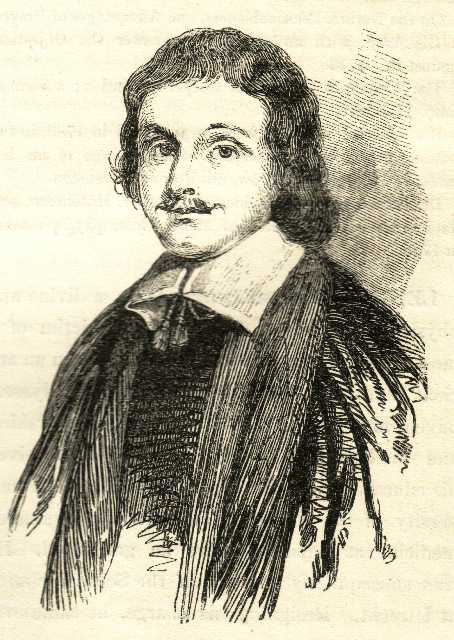
[portrait of bishop Robert Leighton]
Disappointed, however, in his object, and continually thwarted
in his plans of moderation by Sharp and his tyrannical coadjutors,
Leighton finally resolved to resign his dignity, as it was a burden
too great for him to sustain. With this view, he again proceeded to
London in the beginning of 1673, and, after much solicitation,
obtained the king’s reluctant consent to his retirement, on
condition that he remained in office another year. That period
having expired, and all prospect of reconciling the two parties
being at an end, his resignation was at length accepted, when the
former possessor of the see, Dr. Burnet, was restored to it. Bishop
Leighton resided for some time within the college of Edinburgh, and
afterwards removed to Broadhurst, in Sussex, the estate of his
sister, the widow of Edward Lightmaker, Esq., where he lived for ten
years in great privacy, spending his time in study, devotion, and
acts of charity, and occasionally preaching. At the request of
Bishop Burnet, he went to London to see the earl of Perth, and being
seized with a pleurisy, died at the Bell Inn, in Warwick Lane,
February 1, 1684, in the 71st year of his age.
This distinguished prelate is celebrated for his gentleness,
unfeigned piety, extensive learning, and great disinterestedness.
Although his bishopric produced him only £200, and his archbishopric
£400 per annum, he founded an exhibition or bursary in the
university of Edinburgh, with two more in that of Glasgow, and gave
£150 for the maintenance of two paupers in St. Nicholas’ Hospital,
in the latter city. His writings still bear a high character; and
some of them, particularly his admirable ‘Commentary on St. Peter,’
have been frequently reprinted.
His works are:
Sermons. London, 1692, 4to.
Prelectiones Theologicae, quibus adjiciuntur Meditationes
Ethico-Criticae in Psalmos iv. xxxii. cxxx. Lond. 1693, 4to.
A Practical Commentary upon the two first chapters of the
First Epistle of St. Peter. York, 1693, 2 vols. 4to. Also in 2 vols,
8vo.
Three Posthumous tracts, viz. Rules for a holy Life; a Sermon;
and a Catechism. Lond. 1708, 12mo.
Works; with a Life of the Author, by the Rev. G. Jerment.
1808, 6 vols, 8vo. this is the most ample edition, including many
pieces never before published.



