|
 BREWSTER, a
surname originally English, which in the present century has become
distinguished in Scotland by its being borne by one who has acquired for
himself a high place both in literature and science – Sir David
Brewster, F.R.S., and corresponding member of the National Institute of
France, born December 11th, 1781, the son of James Brewster, Esq.,
rector of the grammar school, Jedburgh. He was educated for the Church
of Scotland, and was licensed to preach the gospel. In 1800, he received
the honorary degree of M.A. from the university of Edinburgh, and, in
1807, that of LL.D. from the university of Aberdeen. In 1808, he was
elected a fellow of the Royal Society of Edinburgh, and in the same year
he undertook the editorship of the ‘Edinburgh Encyclopedia,’ which was
only finished in 1830. Between 1801 and 1912, he devoted his attention
chiefly to the study of optics; and in 1813, he published the results in
a ‘Treatise on New Philosophical Instruments.’ In 1815, he received the
Copley medal of the Royal Society for one of his discoveries in optical
science; and soon after was admitted a Fellow of that body. The
following year he invented the Kaleidoscope, the patent right of which
was evaded, so that the inventor gained little beyond fame, though the
large sale of the instrument must have produced considerable profit. The
same year, the Institute of France adjudged to him half of the physical
prize of 3,000 francs, awarded for two of the most important discoveries
made in Europe, in any branch of science, during the two preceding
years. In 1819, Dr. Brewster received from the Royal Society the Rumford
gold and silver medals, for his discoveries on the polarization of
light. In the latter year, in conjunction with Professor Jamieson, he
established ‘The Edinburgh Philosophical Journal,’ and subsequently
commenced ‘The Edinburgh Journal of Science,’ of which 16 volumes
appeared. In 1825, the Institute of France elected Dr. Brewster a
corresponding member, and he received the same honour from the Royal
Academies of Russia, Prussia, Sweden, and Denmark. In 1831, he proposed
the meeting at York, which led to the establishment of the British
Association for the advancement of Science. The same year he received
the decoration of the Hanoverian Guelphic Order; and, in 1832, the
honour of knighthood from William IV. Besides contributing largely to
the ‘Edinburgh Review,’ the ‘Transactions of the British Association,’
and other scientific societies, and the ‘North British Review,’ Sir
David is the author of the following, among other popular works, viz.:
‘A Treatise on the Kaleidoscope;’ ‘A Treatise on Optics;’ ‘Letters on
Natural Magic;’ ‘Life of Sir Isaac Newton;’ ‘More Worlds than One,’ in
reply to Professor Whewell’s ‘Plurality of Worlds.’ He is one of the
editors of ‘The London and Edinburgh Philosophical Magazine.’ In 1838 he
was appointed, by the crown, principal of the united colleges of St.
Salvator and St. Leonard, St. Andrews. On January 2, 1849, he was
elected one of the eight Foreign Associate Members of the National
Institute of France, vacant by the death of the celebrated chemist. M.
Berzelius, and in 1855, the emperor of the French conferred on him the
decoration of an officer of the legion of honour. The eight associate
members of the Institute are generally regarded as the eight greatest
celebrities in the learned world. Sir David has a pension from
government of £300 a-year. He married 1st, a daughter of Macpherson, the
translator of ‘Ossian’s Poems,’ and by her had several children; and
2dly, in 1857, Jane, daughter of Thomas Purcell, Esq. of Scarborough. In
1859 he was elected principal and vice-chancellor of the university of
Edinburgh. BREWSTER, a
surname originally English, which in the present century has become
distinguished in Scotland by its being borne by one who has acquired for
himself a high place both in literature and science – Sir David
Brewster, F.R.S., and corresponding member of the National Institute of
France, born December 11th, 1781, the son of James Brewster, Esq.,
rector of the grammar school, Jedburgh. He was educated for the Church
of Scotland, and was licensed to preach the gospel. In 1800, he received
the honorary degree of M.A. from the university of Edinburgh, and, in
1807, that of LL.D. from the university of Aberdeen. In 1808, he was
elected a fellow of the Royal Society of Edinburgh, and in the same year
he undertook the editorship of the ‘Edinburgh Encyclopedia,’ which was
only finished in 1830. Between 1801 and 1912, he devoted his attention
chiefly to the study of optics; and in 1813, he published the results in
a ‘Treatise on New Philosophical Instruments.’ In 1815, he received the
Copley medal of the Royal Society for one of his discoveries in optical
science; and soon after was admitted a Fellow of that body. The
following year he invented the Kaleidoscope, the patent right of which
was evaded, so that the inventor gained little beyond fame, though the
large sale of the instrument must have produced considerable profit. The
same year, the Institute of France adjudged to him half of the physical
prize of 3,000 francs, awarded for two of the most important discoveries
made in Europe, in any branch of science, during the two preceding
years. In 1819, Dr. Brewster received from the Royal Society the Rumford
gold and silver medals, for his discoveries on the polarization of
light. In the latter year, in conjunction with Professor Jamieson, he
established ‘The Edinburgh Philosophical Journal,’ and subsequently
commenced ‘The Edinburgh Journal of Science,’ of which 16 volumes
appeared. In 1825, the Institute of France elected Dr. Brewster a
corresponding member, and he received the same honour from the Royal
Academies of Russia, Prussia, Sweden, and Denmark. In 1831, he proposed
the meeting at York, which led to the establishment of the British
Association for the advancement of Science. The same year he received
the decoration of the Hanoverian Guelphic Order; and, in 1832, the
honour of knighthood from William IV. Besides contributing largely to
the ‘Edinburgh Review,’ the ‘Transactions of the British Association,’
and other scientific societies, and the ‘North British Review,’ Sir
David is the author of the following, among other popular works, viz.:
‘A Treatise on the Kaleidoscope;’ ‘A Treatise on Optics;’ ‘Letters on
Natural Magic;’ ‘Life of Sir Isaac Newton;’ ‘More Worlds than One,’ in
reply to Professor Whewell’s ‘Plurality of Worlds.’ He is one of the
editors of ‘The London and Edinburgh Philosophical Magazine.’ In 1838 he
was appointed, by the crown, principal of the united colleges of St.
Salvator and St. Leonard, St. Andrews. On January 2, 1849, he was
elected one of the eight Foreign Associate Members of the National
Institute of France, vacant by the death of the celebrated chemist. M.
Berzelius, and in 1855, the emperor of the French conferred on him the
decoration of an officer of the legion of honour. The eight associate
members of the Institute are generally regarded as the eight greatest
celebrities in the learned world. Sir David has a pension from
government of £300 a-year. He married 1st, a daughter of Macpherson, the
translator of ‘Ossian’s Poems,’ and by her had several children; and
2dly, in 1857, Jane, daughter of Thomas Purcell, Esq. of Scarborough. In
1859 he was elected principal and vice-chancellor of the university of
Edinburgh.
The surname Brewster is
one of those, like Sangster and Webster, terminating in ster, which, in
the Anglo-Saxon times, were the regular form of feminine occupations. An
old family of this surname, Brewster of Wrentham, were settled in the
county of Suffolk, possessing lands in twenty parishes in that county
and the county of Norfolk. In the civil wars Colonel Humphrey Brewster,
of this family, raised and commanded a troop of horse against Charles
the First, and Robert Brewster, Esq., the then possessor of Wrentham,
sat as member for Dunwich in the long parliament. In the reign of Edward
the Third, John Brewster was rector of Godwick in the county of Norfolk.
In a sasine, of date 31st March 1477, in the Chartulary of Glasgow, we
meet with the name of John Brewster, quondam proprietor of a house or
tenement in the High Street of that city.
In 1516, one John
Brewster was burnt for Loliardism at Smithfield.
Of the parent stem, --
the Brewsters of Wrentham, -- branches exist in the counties of Essex,
Durham, Kent, and Northampton, also in Scotland and in Ireland. The
Scottish line may be said to be represented by the family of which Sir
David Brewster is such a distinguished member, and the Irish by Abraham
Brewster, Esq., queen’s counsel, of Merrion Square, Dublin. Another
branch was established in the United States, by William Brewster, the
ruling elder and spiritual guide of the Pilgrim Fathers, who had served
as a diplomatist in the Low Countries, and in 1608 went with Robinson,
the minister of the Puritans, to Holland, and in 1620 conducted the
emigrants from England, by whom New England was founded. Robinson did
not accompany them, but died at Leyden in 1625. [History of the United
States of America, by George Bancroft, Esq., Fullarton’s edition, p.
124.]
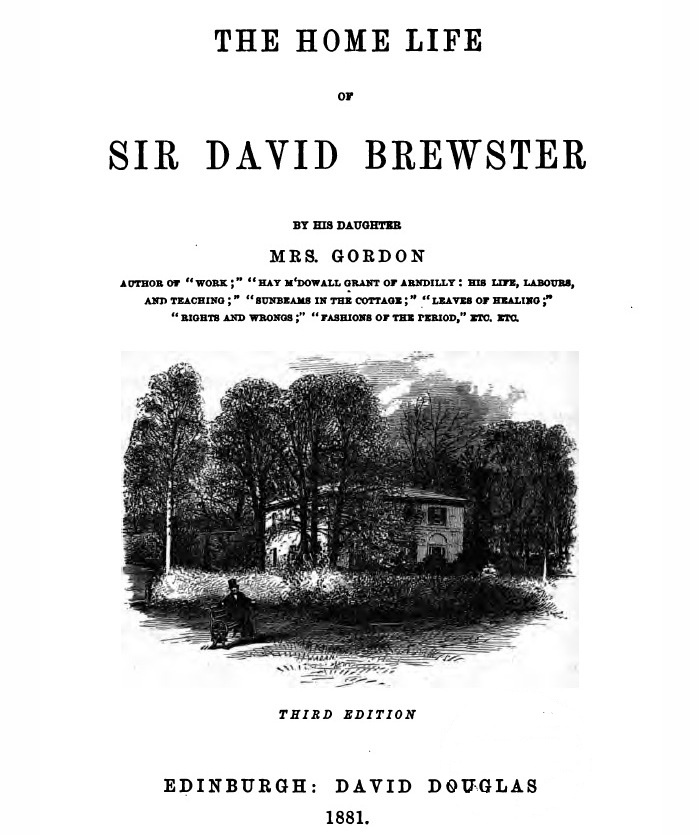
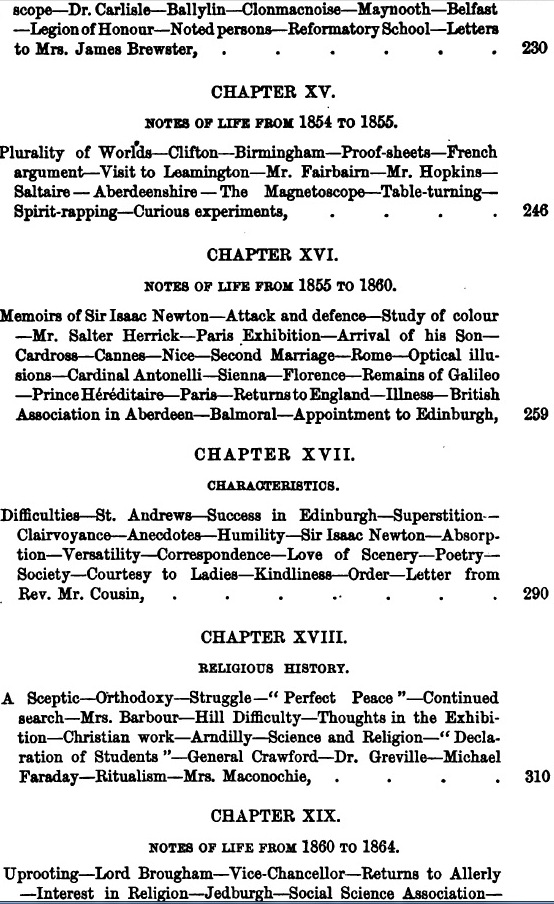
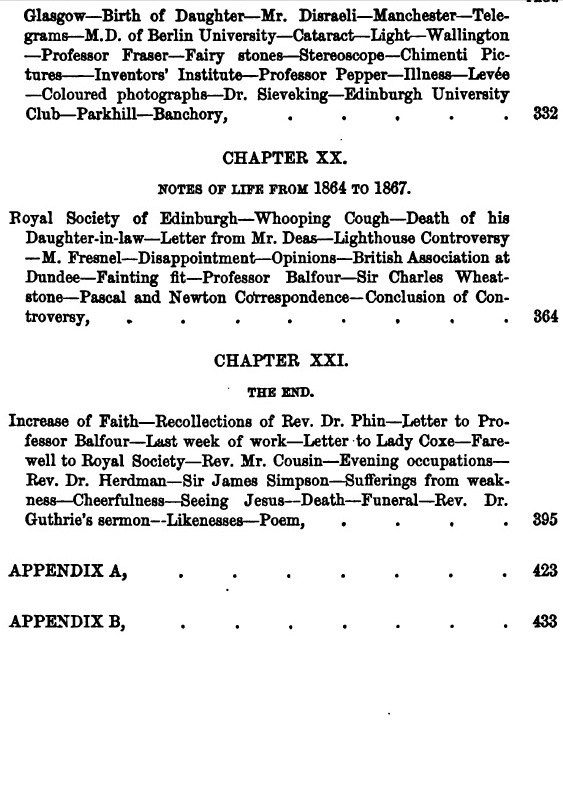
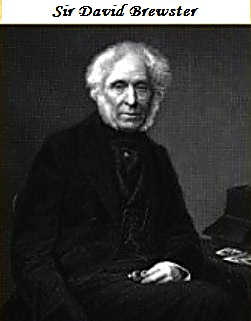
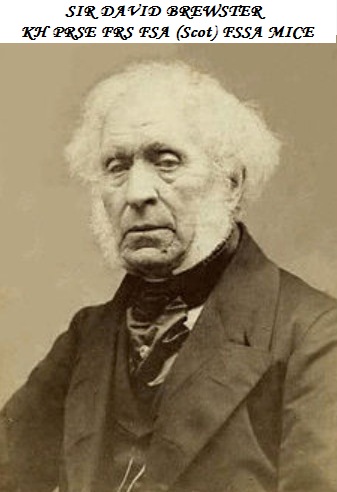
Sir David Brewster
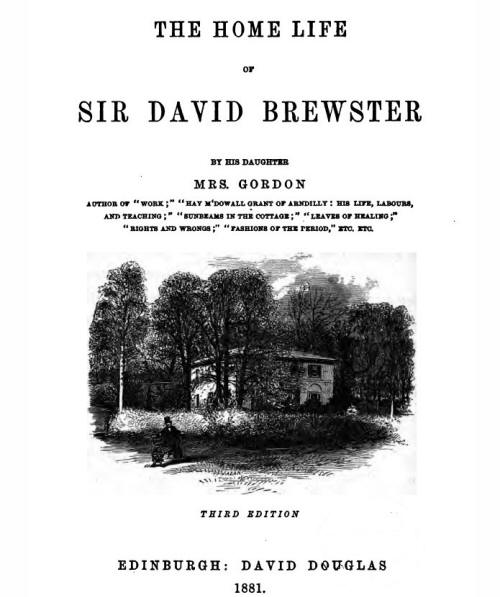
Here we are bringing you a
book about the Home Life of Sir David Brewster by his daughter...
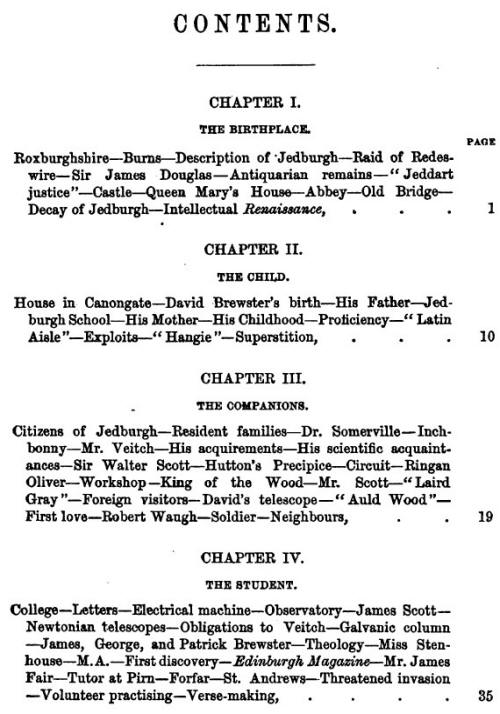
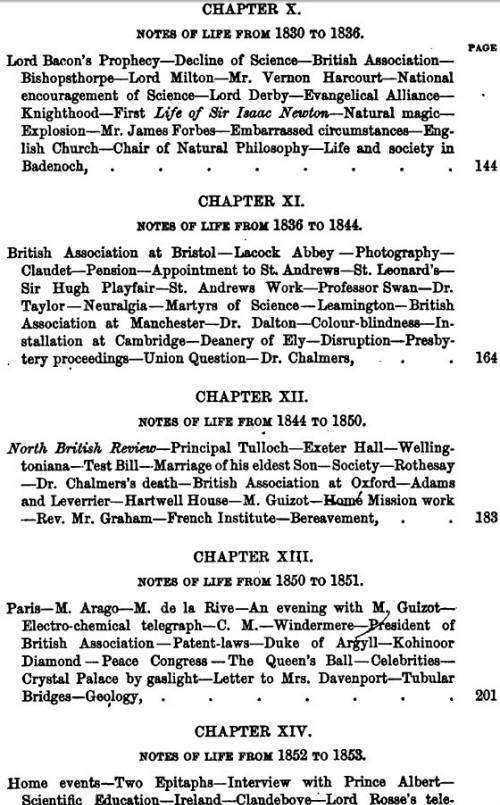
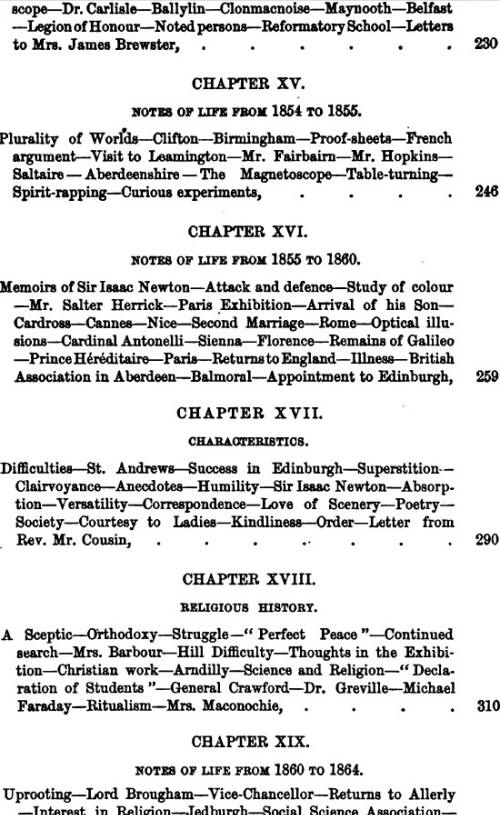
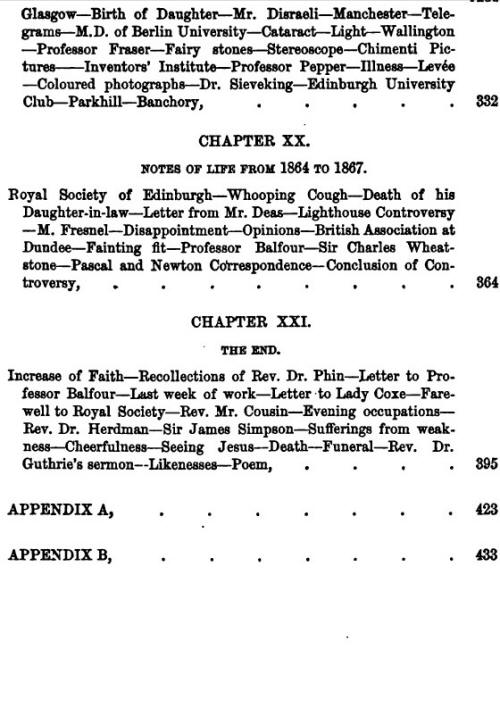
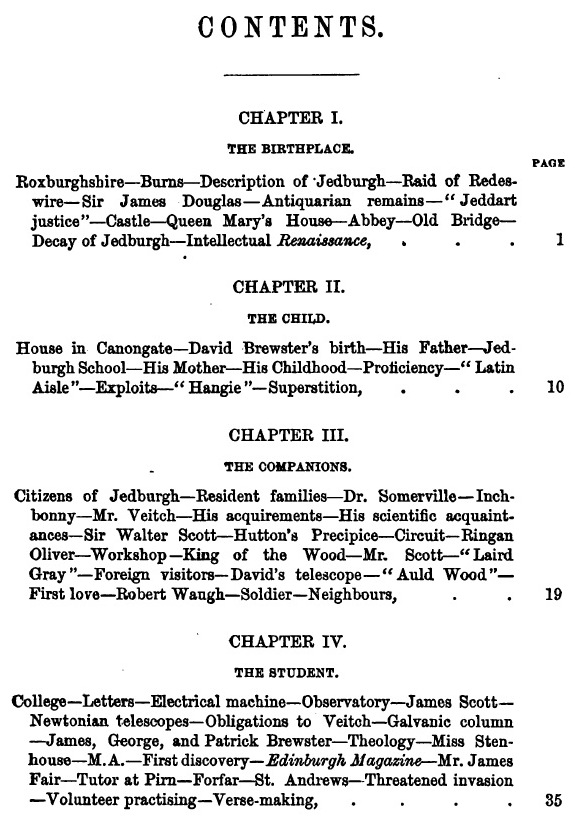
Chapter I
- The Birthplace
Chapter II - The Child
Chapter III - The Campanions
Chapter IV - The Student
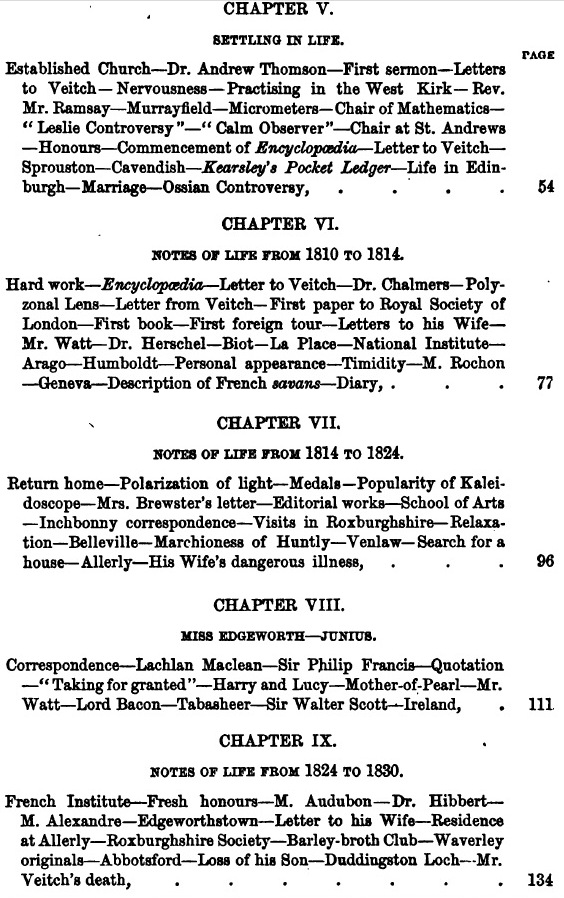
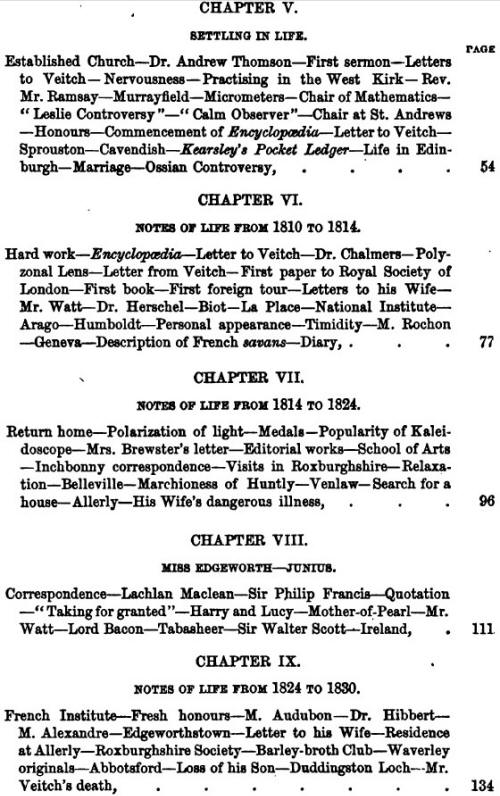
Chapter V - Settling in Life
Chapter VI - Notes of Life from 1810
to 1814
Chapter VII - Notes of Life from
1814 to 1824
Chapter VIII - Miss Edgeworth -
Junius
Chapter IX - Notes of Life from 1824
to 1830
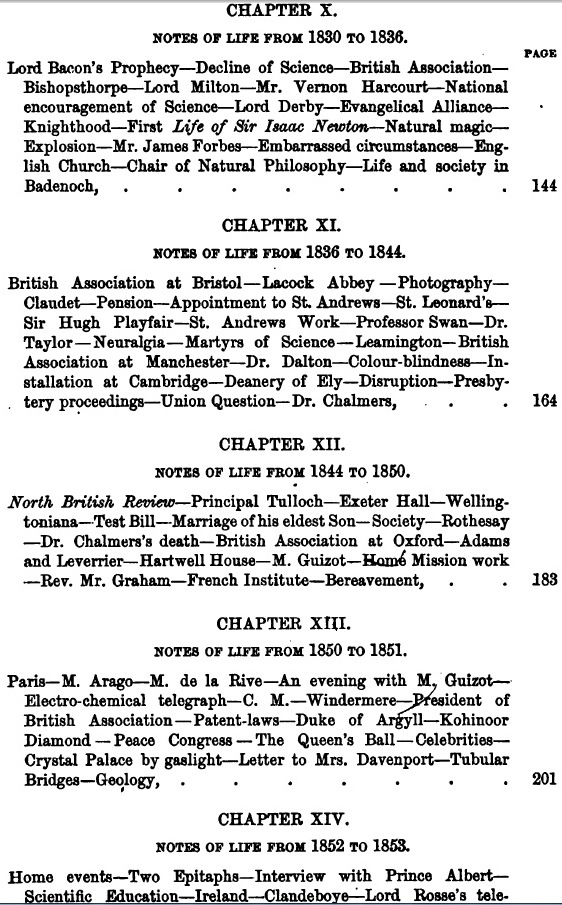
Chapter X - Notes of Life from 1830 to
1836
Chapter XI - Notes of Life from 1836
to 1844
Chapter XII - Notes of Life from
1844 to 1850
Chapter XIII - Notes of Life in
1850-51
Chapter XIV - Notes of Life in
1852-3
Chapter XV - Notes of Life in 1854-55
Chapter XVI - Notes of Life from
1855 to 1860
Chapter XVII - Characteristics
Chapter XVIII - Religious History
Chapter XIX - Notes of Life from
1860 to 1864
Chapter XX - Notes of Life from 1864
to 1867
Chapter XXI - The End
Appendices |